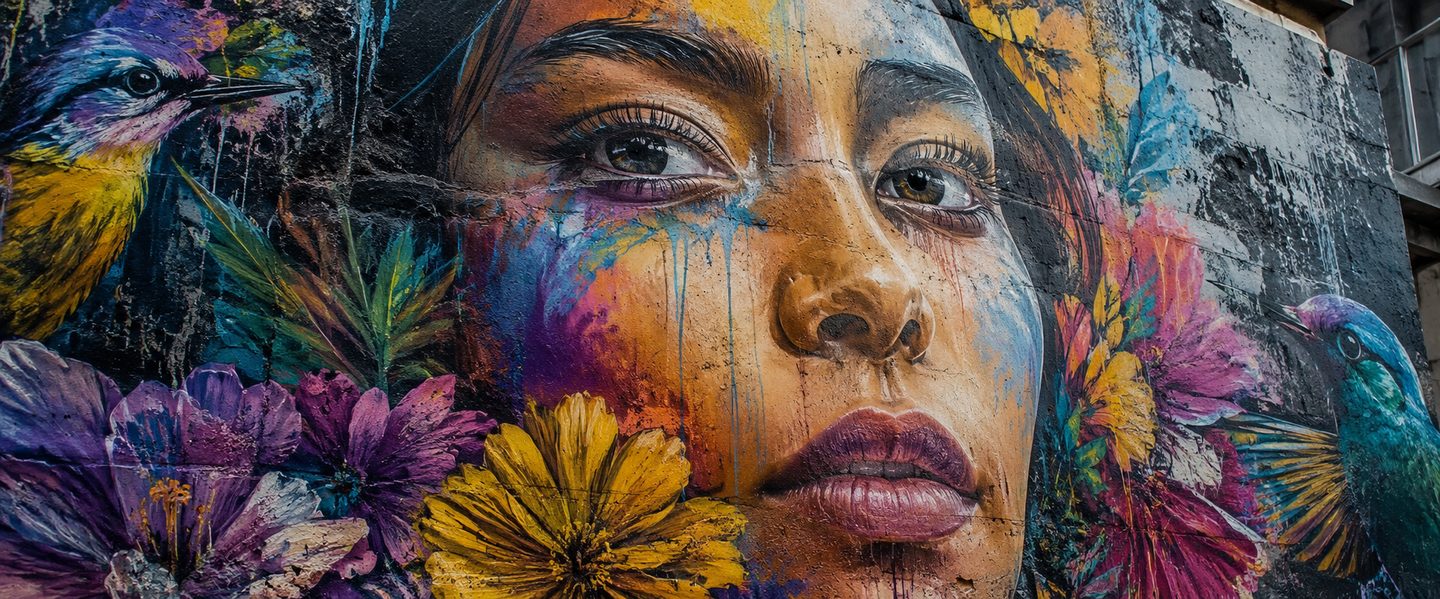
Medellín's Open-Air Gallery
The Street Art of Comuna 13
Hundreds of murals cover every surface of Medellín's most visited neighborhood — a living canvas that tells the story of resilience through color.
Explore the murals ↓
Hundreds of murals cover every surface of Medellín's most visited neighborhood — a living canvas that tells the story of resilience through color.
Explore the murals ↓Every wall tells a story. From massive portraiture to abstract color explosions, Comuna 13's graffiti is among the most dense and vibrant street art anywhere on earth.
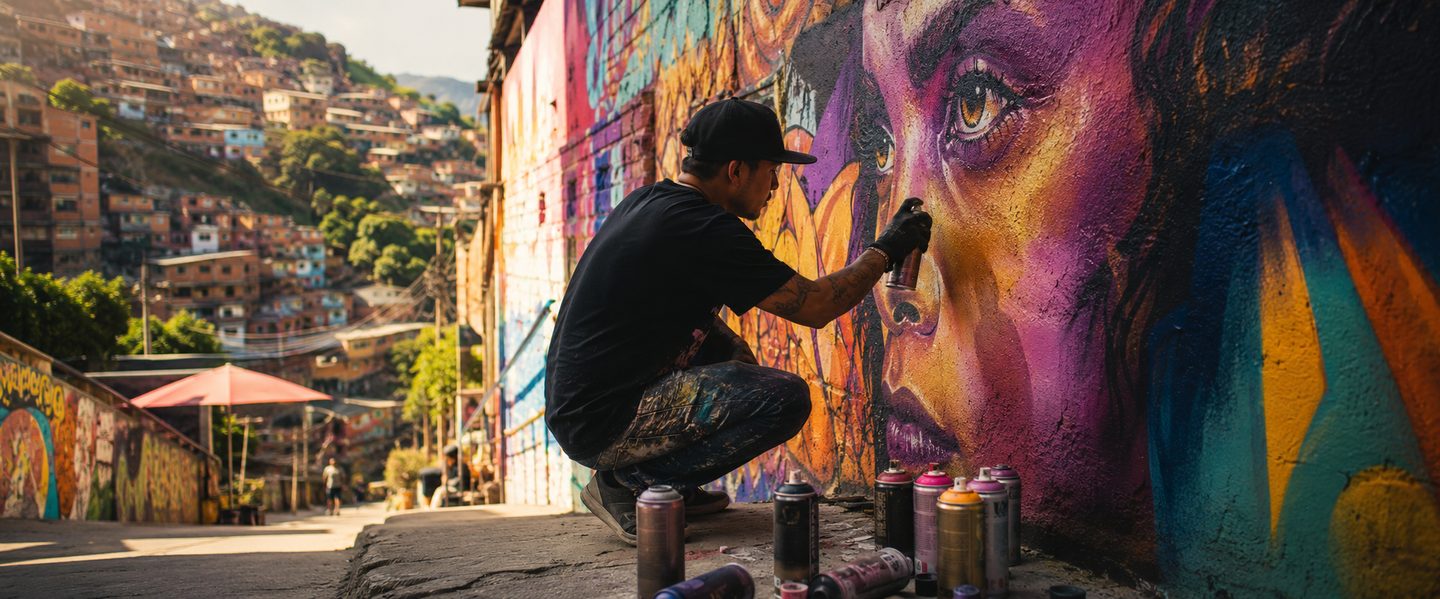
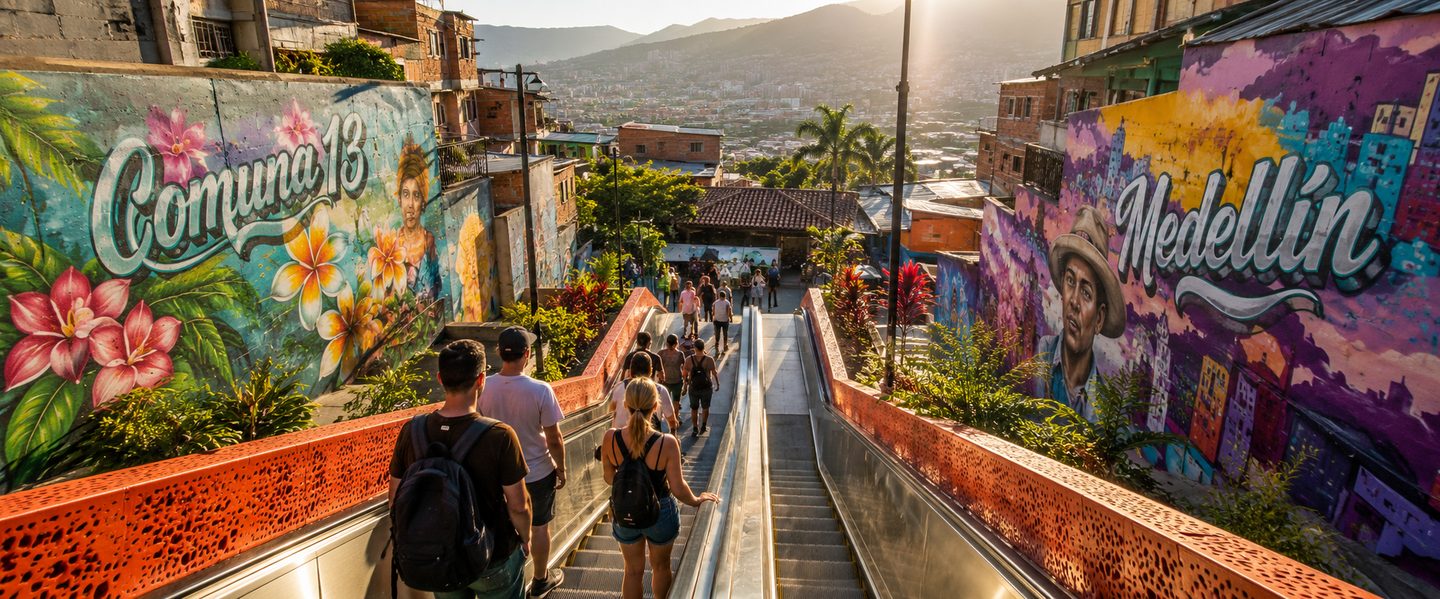
The murals of Comuna 13 change constantly — new works appear every few months as local and visiting artists add to the living gallery.
Graffiti tours run 2–4 hours with guides who know every mural's story. Free cancellation.
Comuna 13's transformation from conflict zone to open-air gallery wasn't accidental. It was built by artists who refused to let violence be the neighborhood's only story.
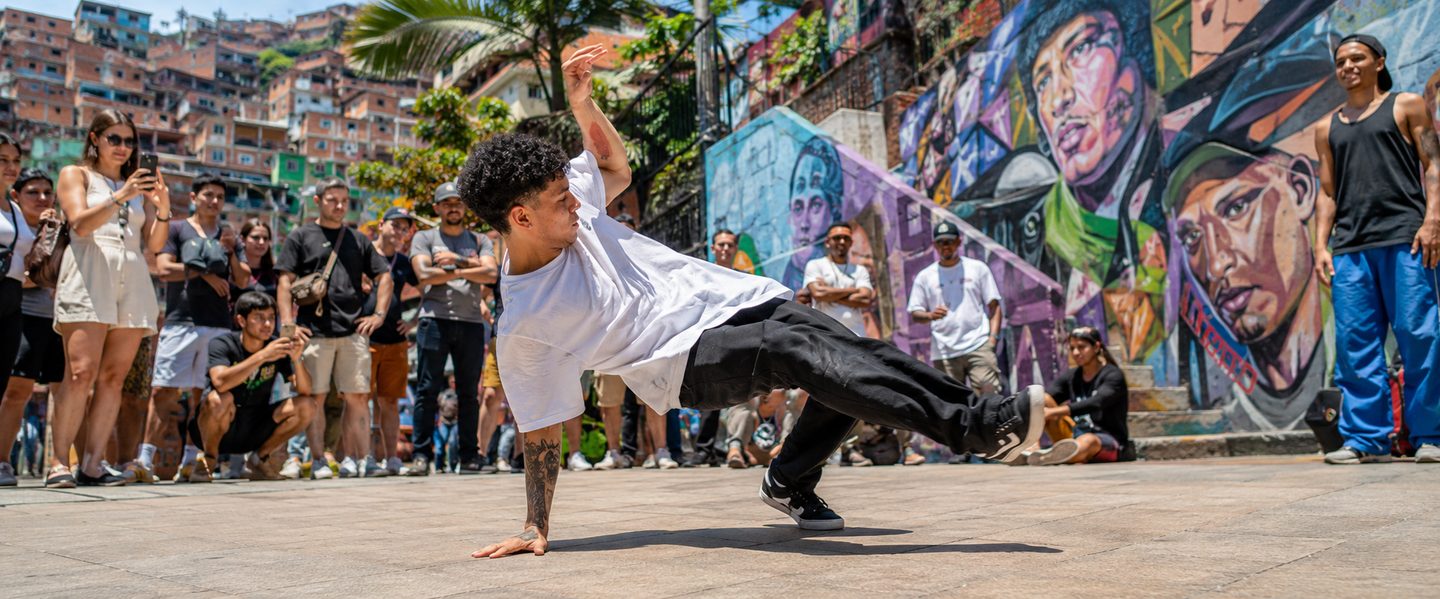
The collective Casa Kolacho, co-founded by hip-hop activist Jeihhco, has been the driving force behind Comuna 13's cultural renaissance for over 15 years. What started as a hip-hop crew became a full community organization — running graffiti workshops, breakdance classes, guided tours, and youth programs.
Their philosophy: art and music aren't decoration — they're tools for social cohesion in a community that experienced decades of armed conflict. The breakdancers, rappers, and muralists you see on every corner are the direct result of this movement.
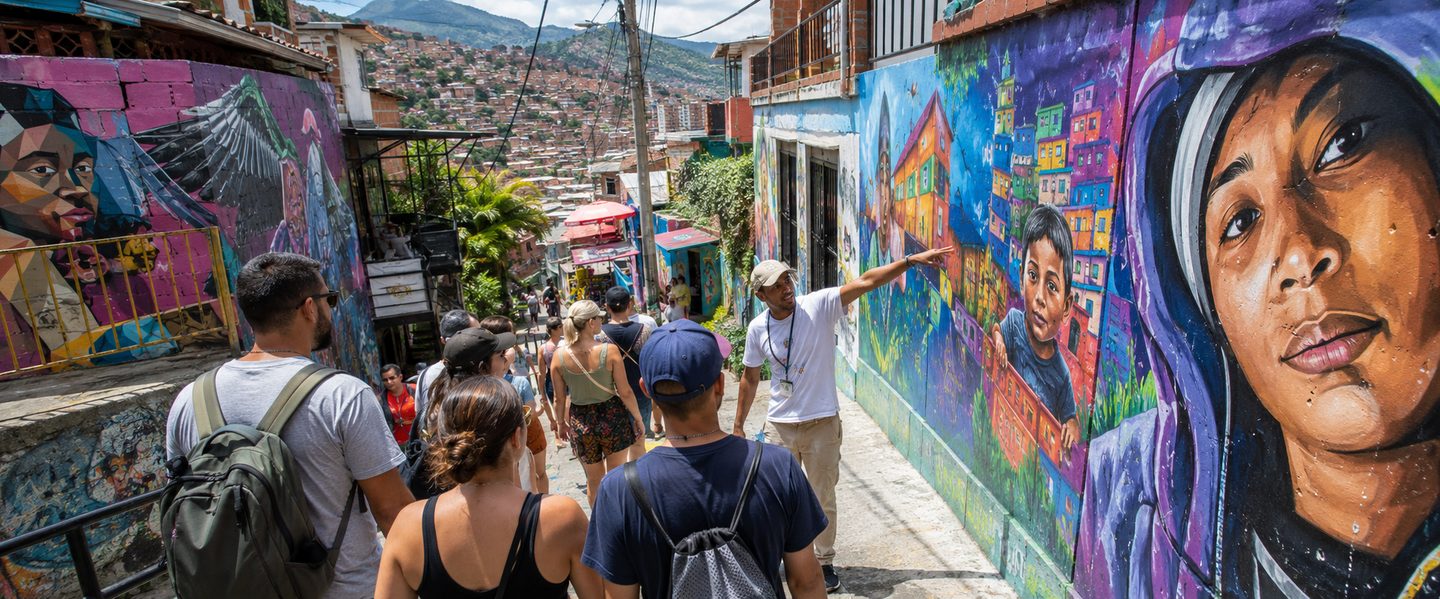
What makes Comuna 13's art scene different from other street art districts is ownership. The murals aren't commissioned by city governments or tourism boards — they're created by locals and invited artists, with themes chosen by the community.
Portraits of displaced families. Scenes of nature reclaiming concrete. Abstract color that covers bullet-scarred walls. Every piece is a deliberate act of reclamation — turning a neighborhood defined by violence into one defined by creativity.
The best graffiti tours are led by local guides connected to the art scene. From $15/person.
The main mural route runs roughly 1.5 km through the heart of Comuna 13. Here's what you'll see from bottom to top.
Most tours and self-guided walks start here. From El Poblado, take Metro Line A west. The station itself has some art pieces and marks the transition into the neighborhood.
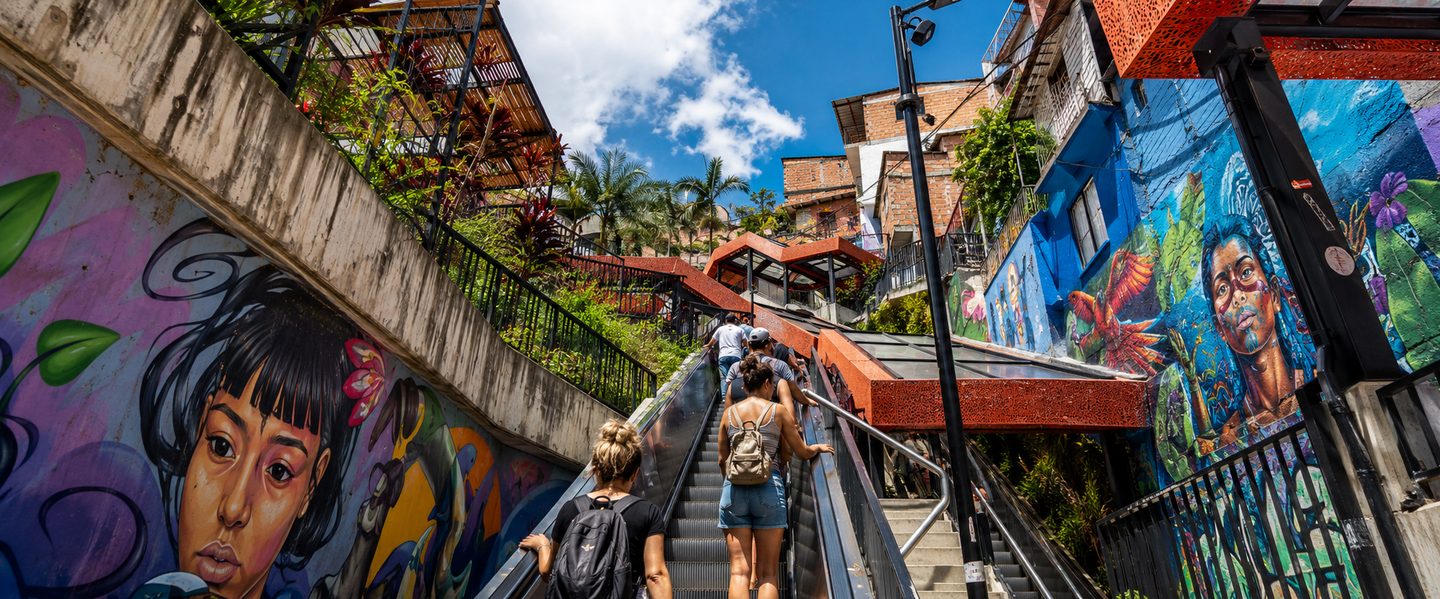
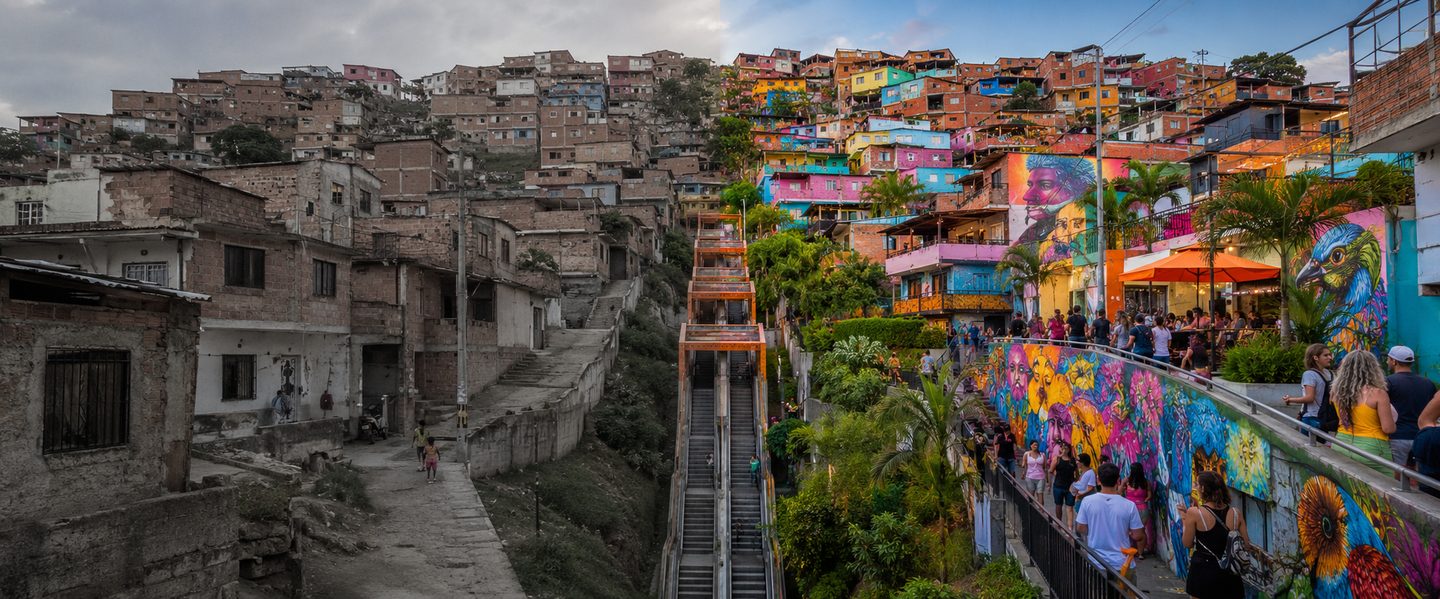
Six outdoor escalators cut 28 stories of hillside climbing into a gentle ride. Installed in 2011, they were a symbol of the city investing in its most neglected communities. The walls flanking each section are prime mural real estate.
The densest concentration of murals — every surface is painted. Massive portraits, nature scenes, abstract explosions of color. This is where guided tours spend the most time, and where breakdancers and musicians perform.
Local entrepreneurs line the route with handmade jewelry, art prints, empanadas, arepas, chicha, and fresh fruit. Most tours include a food stop here. Cash is handy for vendors.
At the top, a panoramic viewpoint overlooking the valley and the sprawling hillside neighborhood. The best photo spot in Comuna 13. On clear days, you can see across the entire Aburrá Valley.
4-hour graffiti tour with cable car, food tasting, and every stop on the trail. From $22.
Whether you're shooting on a phone or a mirrorless, these are the spots that make the best images.
Best light: Morning tours (9–11 AM) get direct sunlight on the main mural corridor. The colors pop hardest before noon. Golden hour (4–5 PM) is gorgeous but the main route faces west, so you'll be shooting into the light.
The escalator shot: Shoot from the bottom looking up for the iconic escalator-flanked-by-murals framing. Go wide angle if you have it.
The viewpoint panorama: At the top of the route, the mirador gives you the full hillside in one frame — best shot in the neighborhood.
Detail shots: Get close. The best murals have incredible brushwork, paint drips, and layered textures that only show up when you fill the frame with a single face or scene.
Photos don't do it justice. Book a graffiti tour and hear the stories behind the walls.
Book a Graffiti Tour →